


Why One-Piece Toilets Are Inherently Harder to Build Than Two-Piece Toilets
Molds:
One-piece tooling is larger, structurally more complex, and significantly more expensive per set than two-piece molds.
Casting:
They require more slip, longer consolidation time, and involve far trickier demolding of a heavy, fragile single green body.
Rejection rate:
It is an open industry fact that one-piece lines carry a structurally higher defect rate. A single crack anywhere on the unit scraps the entire piece — bowl and tank together.
Second, storage and freight costs add persistent pressure
One-piece units cannot be stacked as efficiently as two-piece or WC suspendu, taking up far more warehouse space per unit. For manufacturers producing les toilettes at scale, rising storage costs paired with shrinking margins are already a widespread industry challenge. On top of that, fewer units fit per shipping container, driving up per-unit logistics costs noticeably.
Most overlooked: Flush testing
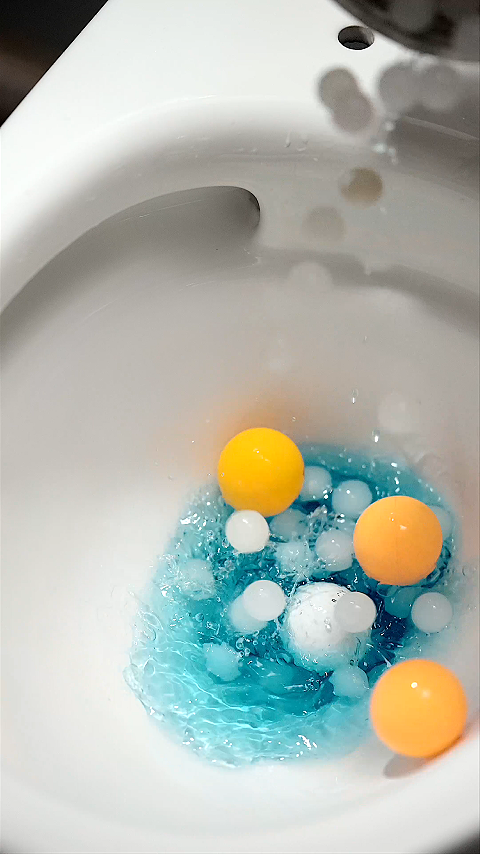
Unlike two-piece toilets, one-piece units cannot be flush-tested immediately after firing — each one requires a full set of tank fittings installed first. Testing 1,000 fresh units per day would mean either consuming 1,000 tank fitting sets daily, or repeatedly installing and removing them. Neither makes sense for cost control. The real industry practice is to run full flush function tests only once bulk orders are confirmed. It is rational cost management, but it comes with a clear tradeoff: defective units cannot be identified and pulled from inventory right away.
This is exactly why working with a true source factory makes all the difference. If your supplier sources cuvette wc suspendu from a third-party plant, on-site flush testing at the production stage is logistically and economically unfeasible. Defects only surface when the supplier runs their own tests.
Every extra layer in the supply chain multiplies complexity and cost, and creates constant pressure to cut corners on quality. Consistent quality always comes at a price.
At the end of the day, for manufacturers, the real question is never, “Can we make a one-piece toilet?” Both high-pressure casting and plaster mold processes can achieve this.
The real question is:
Will the end buyer actually pay the full premium for all these additional costs?
Is the factory's own process management sufficient to keep scrap rates (plus all these hidden costs) within a profitable range?